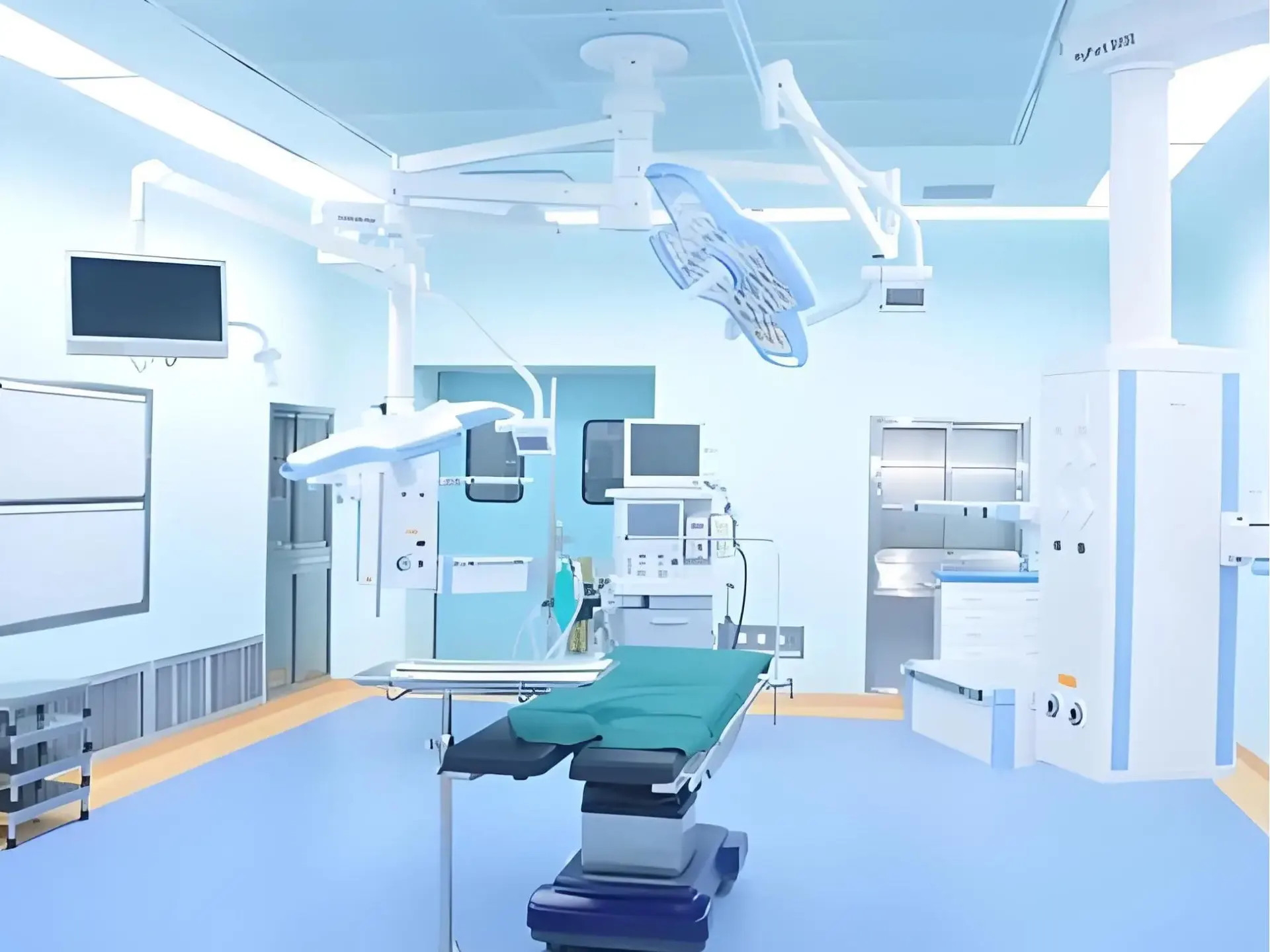
Designing cleanrooms for the pharmaceutical industry requires strict GMP compliance. EMT offers comprehensive solutions from design to turnkey delivery.
The pharmaceutical industry has some of the strictest cleanroom requirements. Drug manufacturing must be conducted in controlled environments to prevent cross-contamination and microbial contamination, ensuring drug safety and efficacy. GMP (Good Manufacturing Practice) imposes a series of mandatory requirements on cleanroom design, construction, and operation.
Regarding cleanliness grades, GMP classifies clean areas into four grades: A, B, C, and D. Grade A areas are for high-risk operations like aseptic filling, requiring near-zero particle and microbial counts under laminar flow protection. EMT designs corresponding HVAC systems and airflow patterns based on different grade requirements. Grade A and B areas use unidirectional (laminar) flow design, while Grade C and D areas use turbulent flow design.
Pressure differential control is a critical element of GMP cleanrooms. EMT employs precision pressure differential control systems to maintain 10-15Pa pressure gradients between adjacent clean zones, preventing air backflow from lower to higher cleanliness areas. All rooms are equipped with real-time pressure monitoring and alarm systems.
Regarding material selection, all sandwich panels, flooring, doors, windows, and cleanroom accessories used in EMT cleanrooms comply with GMP requirements for smooth, dust-free, corrosion-resistant, and easy-to-clean surfaces. Coved corner designs eliminate sharp angles for easier daily cleaning and disinfection. EMT provides turnkey engineering services from concept design through detailed design, construction, and validation to ensure timely delivery and successful GMP audit passage.
Regarding cleanliness grades, GMP classifies clean areas into four grades: A, B, C, and D. Grade A areas are for high-risk operations like aseptic filling, requiring near-zero particle and microbial counts under laminar flow protection. EMT designs corresponding HVAC systems and airflow patterns based on different grade requirements. Grade A and B areas use unidirectional (laminar) flow design, while Grade C and D areas use turbulent flow design.
Pressure differential control is a critical element of GMP cleanrooms. EMT employs precision pressure differential control systems to maintain 10-15Pa pressure gradients between adjacent clean zones, preventing air backflow from lower to higher cleanliness areas. All rooms are equipped with real-time pressure monitoring and alarm systems.
Regarding material selection, all sandwich panels, flooring, doors, windows, and cleanroom accessories used in EMT cleanrooms comply with GMP requirements for smooth, dust-free, corrosion-resistant, and easy-to-clean surfaces. Coved corner designs eliminate sharp angles for easier daily cleaning and disinfection. EMT provides turnkey engineering services from concept design through detailed design, construction, and validation to ensure timely delivery and successful GMP audit passage.